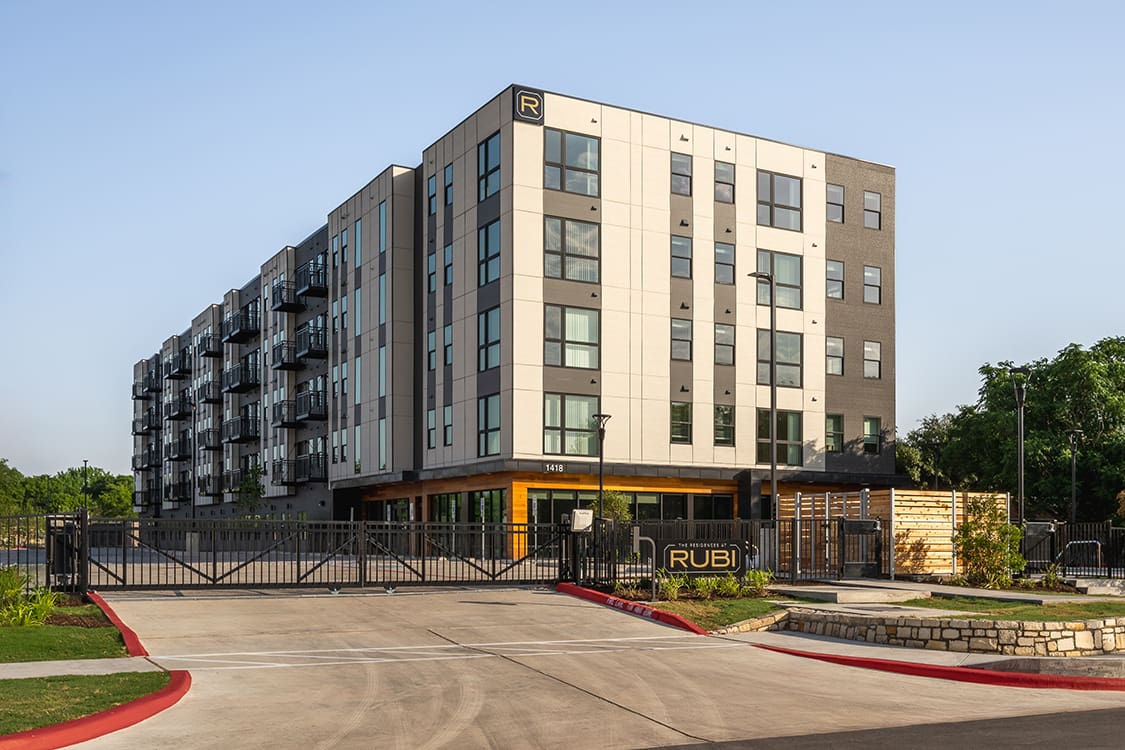
Delivering 101 mixed-income apartments with a shift from wood frame to cold form steel after receiving the building permit.
PROJECT: Residences at Rubi
LOCATION: Austin, Texas
A 101-unit mixed-income building on 1.68 acres is already a tight equation.
At Residences at Rubi, that equation got harder when the project shifted from wood framing to cold formed steel after receiving the building permit.
Despite these constraints, Residences at Rubi delivered 101 workforce and affordable housing apartments combined with market-rate units under Austin’s Affordability Unlocked program.
The project made efficient use of its compact site, established a clear identity in a transitional neighborhood, and stayed aligned with affordability goals even after the original framing strategy changed.
PROJECT SNAPSHOT
Residences at Rubi
-
- 101 units
- 72,400 SF
- 1.68-acre site
- 5 stories
- $16M development cost
- Cold formed steel framing
- 75 parking spaces
- Austin Energy Green Building certified through S.M.A.R.T. Housing participation
- Completion: May 2025
Key Challenges & What Made This Project Work
-
- COMPACT SITE, AMBITIOUS DENSITY >> Used “Affordability Unlocked” to add height and reduce parking demand.
-
- WOOD FRAMING NO LONGER FIT THE DELIVERY STRATEGY >> Reworked the building around cold formed steel without changing the core development logic
-
- AFFORDABILITY INCENTIVES CAME WITH PERFORMANCE REQUIREMENBTS >> Coordinated Austin Energy Green Building compliance, including energy modeling, bike storage, recycling strategies, tenant education, and envelope-related requirements.
-
- FRAGMENTED NEIGHBORHOOD CONTEXT >> Designed a disciplined bar building, clear entry, and visible street-facing amenities.
-
- MIXED-INCOME HOUSING NEEDED ONE COHESIVE IDENTITY >> Focused design value in shared amenities, exterior consistency, and durable materials.
Project Team
-
- Developer: Notional Development Partners
- Architect: Market Square Architects
- Construction Manager: IE2 Construction
- OPM: Spire Consulting Group
- Civil: WGI
- MEP/FP: WGI
- Structural: WGI
- Landscape: WGI
- Interiors: LeVie Interiors
Unlocking Density on a Constrained Site
Before the building could take shape, the site had to support the density the project required.
Austin’s Affordability Unlocked program was central to that equation. It allowed the project to go taller than base zoning would normally permit, increasing allowable height from 35 feet to 52 feet. It also reduced the site’s parking burden. Where a conventional approach would have required 204 spaces, the final plan provided 75, freeing more of the site for housing and shared outdoor space.
Those allowances helped make a 101-unit mixed-income building on 1.68 acres feasible.
As part of that path, and as a condition of the project’s S.M.A.R.T. Housing participation, the development also had to meet Austin Energy Green Building requirements. That added another layer of coordination around energy modeling, bike storage, recycling, tenant education, and envelope performance. These were not side tasks; they were part of what it took to secure the program benefits that helped make the site work.
The program benefits also gave the design team more room to focus on what would matter most at the street: a clear entry sequence, visible amenities, and a stronger building presence in a neighborhood still finding its footing.
Floodplain-related work and elevation changes had to be addressed early, but they were folded into the larger site strategy rather than treated as separate obstacles.
👉 If you’re weighing density, parking, or affordability incentives on a similar site, contact us to talk through early feasibility.
Pivoting from Wood Frame to a Cold Formed Steel Framing System
The defining challenge on this project came after the design was already in motion.
Residences at Rubi was originally designed and permitted as a wood-framed building. During preconstruction, the construction manager proposed shifting to a cold formed steel system that aligned better with the builder’s panelized wall approach and offered advantages in speed, risk, and long-term durability.
That changed more than just the structure. It required the building to be reworked without losing the things that made the development viable in the first place: the unit count, the street-facing amenity strategy, and the overall architectural clarity of the project.
For the developer, the value of the shift was practical. A steel system supported faster assembly, reduced exposure tied to wood-frame construction, and created a more durable long-term asset. The challenge for the design team was making that change without letting the redesign dilute the building or destabilize the project’s economics.
“The framing shift could have unraveled the project if the design had been too rigid. Instead, we reworked the building around a cold formed steel system while holding onto the things that mattered most to the developer, the unit count, the street presence, and the overall clarity of the design.”
— David Gardner, Senior Project Manager, Market Square Architects
Designing a Cohesive Mixed-Income Building
Affordable and workforce housing performs better when the building is designed as one complete experience.
The client was not just trying to meet affordability targets. They were trying to deliver housing that would hold up in the market, contribute positively to the neighborhood, and feel dignified to the people living there.
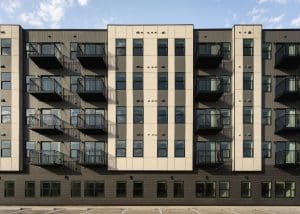
The design response was to avoid visible hierarchy. Market-rate and workforce units are part of one building expression, with shared amenities, a consistent exterior identity, and public-facing spaces that feel considered rather than stripped down. The goal was not to make the project look expensive. It was to make it feel equally resolved from end to end.
This matters because tenant perception, neighborhood credibility, and long-term asset value are all shaped by whether a building looks intentional from day one.
Establishing Identity in a Transitional Neighborhood
The surrounding context did not offer a strong architectural language, so the building had to establish one.
The Montopolis neighborhood is evolving, but it still carries a fragmented physical character. There was no consistent streetscape or architectural vocabulary worth borrowing directly, and trying to blend into that patchwork would have made the project feel visually uncertain. The better move was to give the building its own clarity.
The design uses a long, clean-lined bar form with a restrained façade rhythm and clear material hierarchy. That simplicity was intentional. It helped the building feel legible and durable, kept the massing from overpowering nearby residences, and allowed the project to create a recognizable identity without relying on expensive formal moves.
That strategy becomes most visible at the street. The amenity podium and pool deck were pulled to the front edge of the site so the building would not read as inward-facing or anonymous.
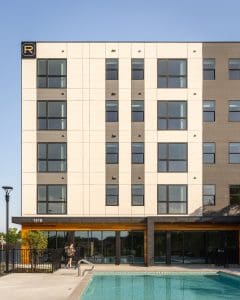
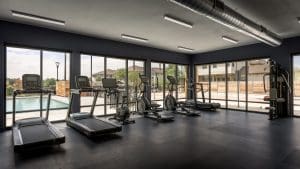
Large expanses of glass make activity visible from the public realm, helping the project feel more open, more active, and more competitive in a neighborhood still finding its footing.
Interior Continuity and Long-Term Value
Material choices reinforce continuity, durability, and perceived value within the project’s affordability constraints.
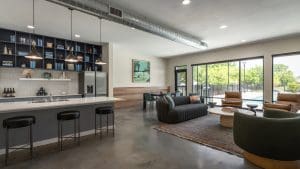
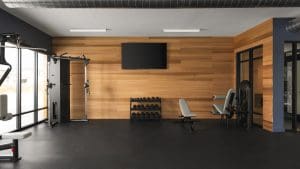
Cedar accents carry from exterior to interior, while sealed concrete floors and a calm earth-toned palette give the shared spaces continuity and warmth. Those choices help the building feel complete rather than pieced together. They also align with long-term ownership priorities by relying on durable, straightforward materials that support maintenance and everyday use.
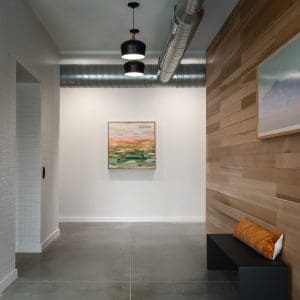
The broader point is not that affordable housing should imitate luxury housing. It is that cost-conscious housing can still feel equal in care, character, and architectural intent when design value is placed in the right areas.
Developer Takeaways from This Project
101 units on 1.68 acres, a mid-project shift to steel, and a street-facing mixed-income product that still feels whole, Rubi is a reminder that affordable housing works best when feasibility, constructability, and design quality stay aligned.
- Entitlements helped make 101 units on 1.68 acres feasible.
- The framing pivot from wood to steel didn’t cost the project its unit count.
- Affordability incentives brought real compliance requirements, not just development bonuses.
- Street-facing amenities made the project more visible and competitive.
- Mixed-income housing works best when it reads as one cohesive experience.
👉 Planning a similar affordable or mixed-income housing project? Let’s talk through your site or early project strategy.