FORUM MAGAZINE | AIA NEW HAMPSHIRE
How one firm became a national, full-service firm in under a decade
by Debbie Kane
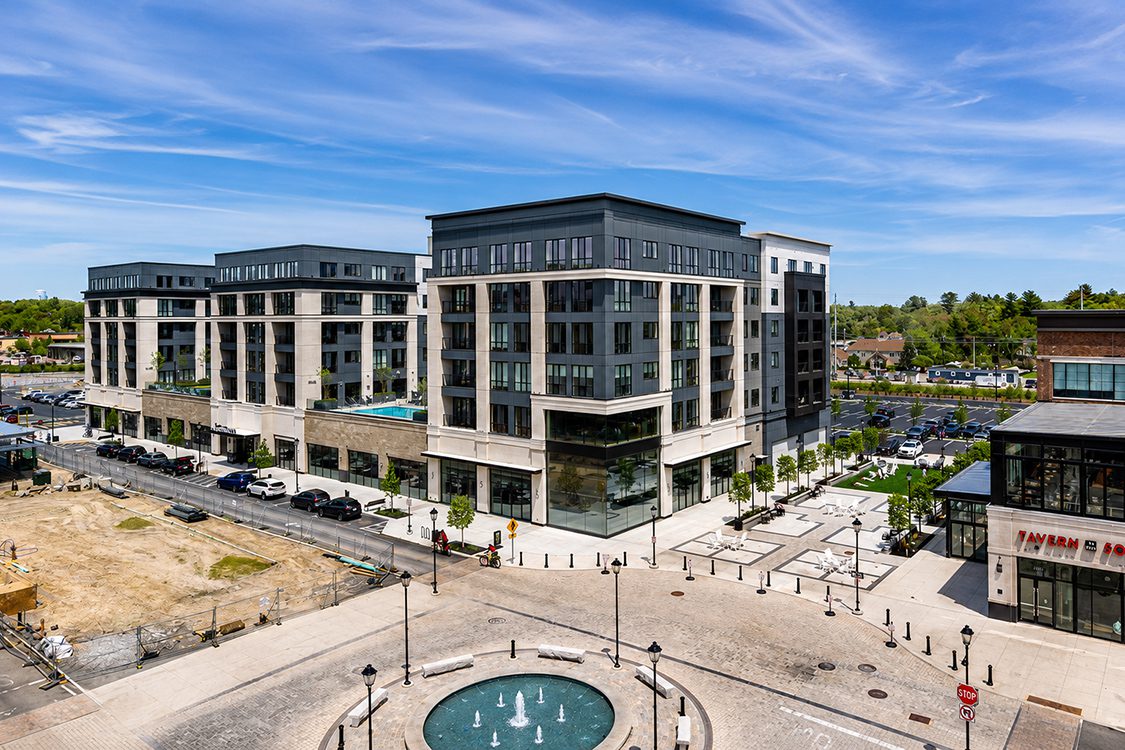
When restaurateur and developer Joseph Faro bought the former Rockingham Park—New England’s first thoroughbred racetrack—in 2016, it was dotted with decaying wooden buildings. Now, the old horse stalls and grandstands have been replaced by the gleaming glass, wood, and stone buildings that comprise Tuscan Village, a 170-acre, mixed-use property featuring more than three million square feet of multi-family housing, retail, dining, office space, and more.
The Epicurean at Tuscan Village in Salem, NH. Photo by Chris Walsh Productions.At the center of Tuscan Village’s growth is Market Square Architects (MSA), one of the development’s key project architects. Founded in 2016 by Adam Wagner, AIA, and Robert Harbeson, AIA, MSA has 42 employees across offices in Portsmouth, Nashville, and Austin. The firm’s project specialties include market-rate multi-family, affordable and workforce housing, and senior living design, as well as mixed-use, commercial office, advanced manufacturing, retail, hospitality, healthcare, and luxury single-family home design. MSA’s diverse expertise—especially on large, complex projects—helped the firm win more than a dozen projects within the sprawling Tuscan Village development, which is projected by the town of Salem to generate approximately $11 million in local tax revenue and increase much-needed residential housing inventory.
The firm’s most recent Tuscan Village project is The Epicurean, a six-story, 480,000-square-foot mixed-use building combining luxury apartments, high-end retail, and a Whole Foods Market (Faro is the developer; Callahan Construction Managers is leading construction). Wagner, principal of MSA, is proud of his firm’s ability to deliver on the project. “We were the only New Hampshire firm to interview for The Epicurean, and we were competing against Boston firms,” he says. “We’ve built a relationship and level of trust (with Tuscan Brands) that helps us navigate project challenges that come up.”
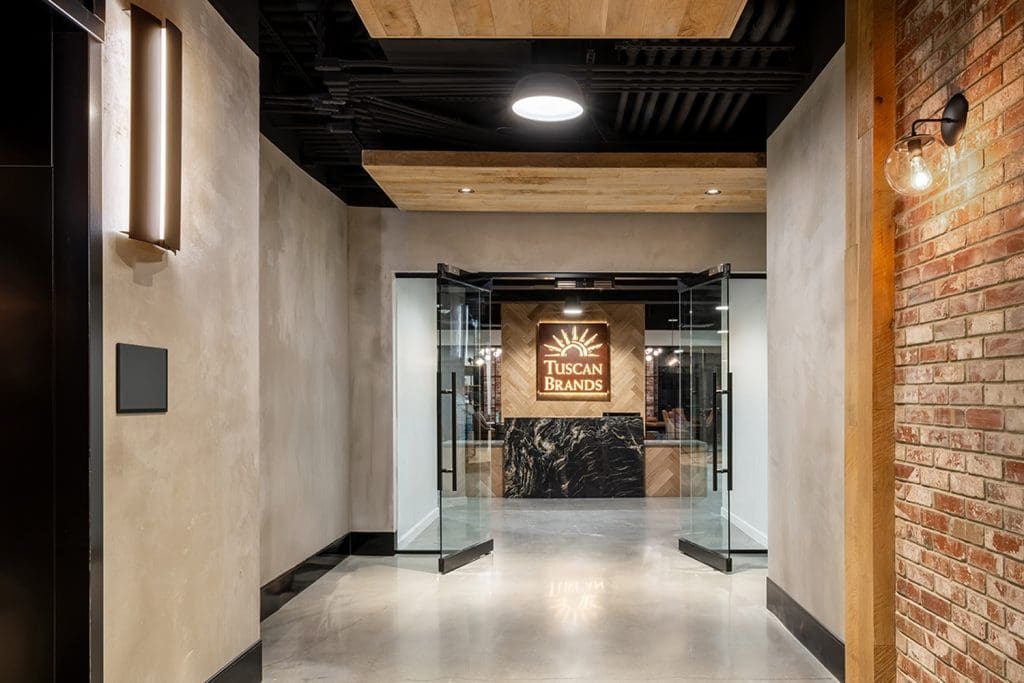
Tuscan Brands corporate headquarters office in Salem, NH. Photo by Robert Umenhofer.
Large projects are in MSA’s wheelhouse. Thanks in part to Wagner’s prior commercial architecture experience, MSA has secured projects ranging up to $120 million in project cost. During MSA’s first year in business, the firm had an opportunity to renovate a former mill in Lawrence, Massachusetts, a 350,000-square-foot project that solidified its reputation as an architectural firm that could handle sophisticated projects. “This is the size and scale of project I’m used to working on, and I wanted to position our firm to handle these projects,” Wagner says.
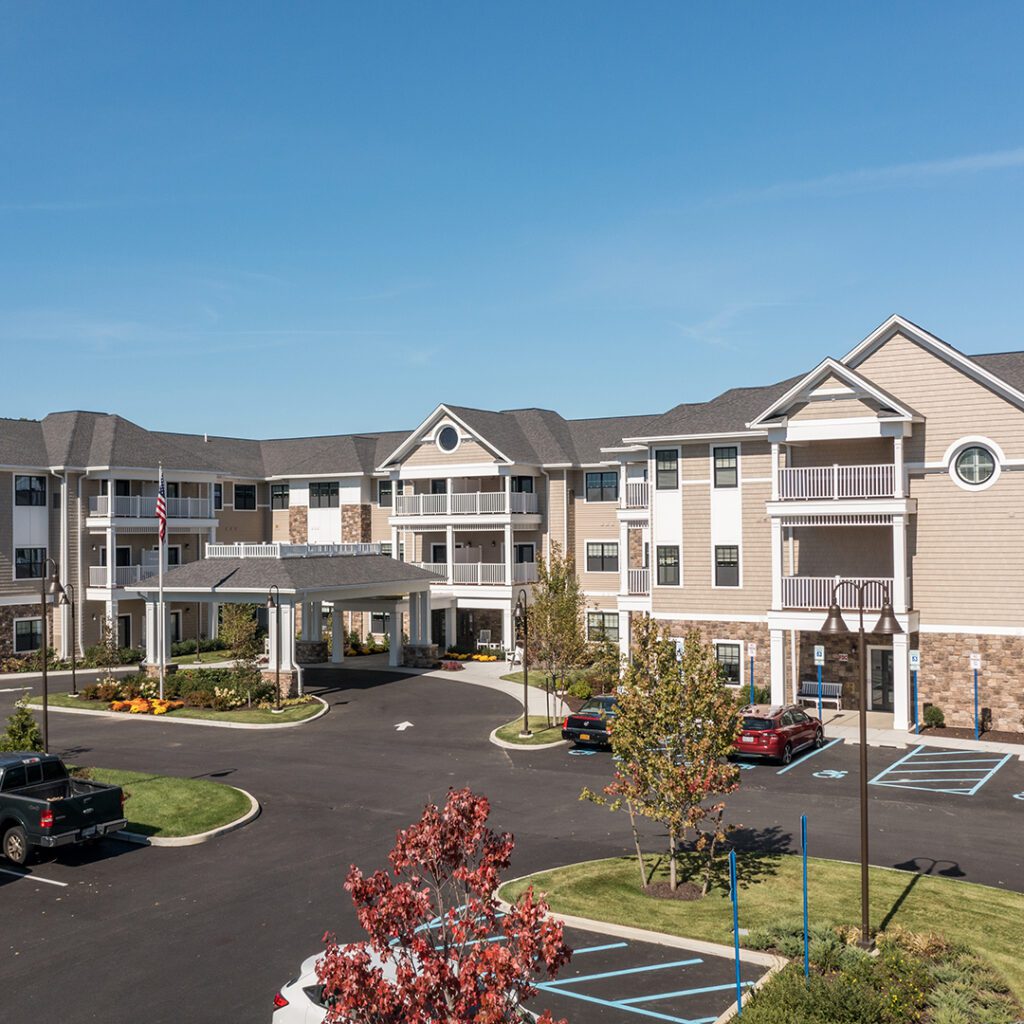
Brightview Port Jefferson senior living community. Photo by Tim Hill.
A large firm by New Hampshire standards, MSA, headquartered in Portsmouth, had annual gross billing in 2025 of more than $12 million. In 2018, the company expanded into Austin with the purchase of Alan Nutt Architects; several years later, in 2022, MSA acquired AESH Design and expanded into Nashville.
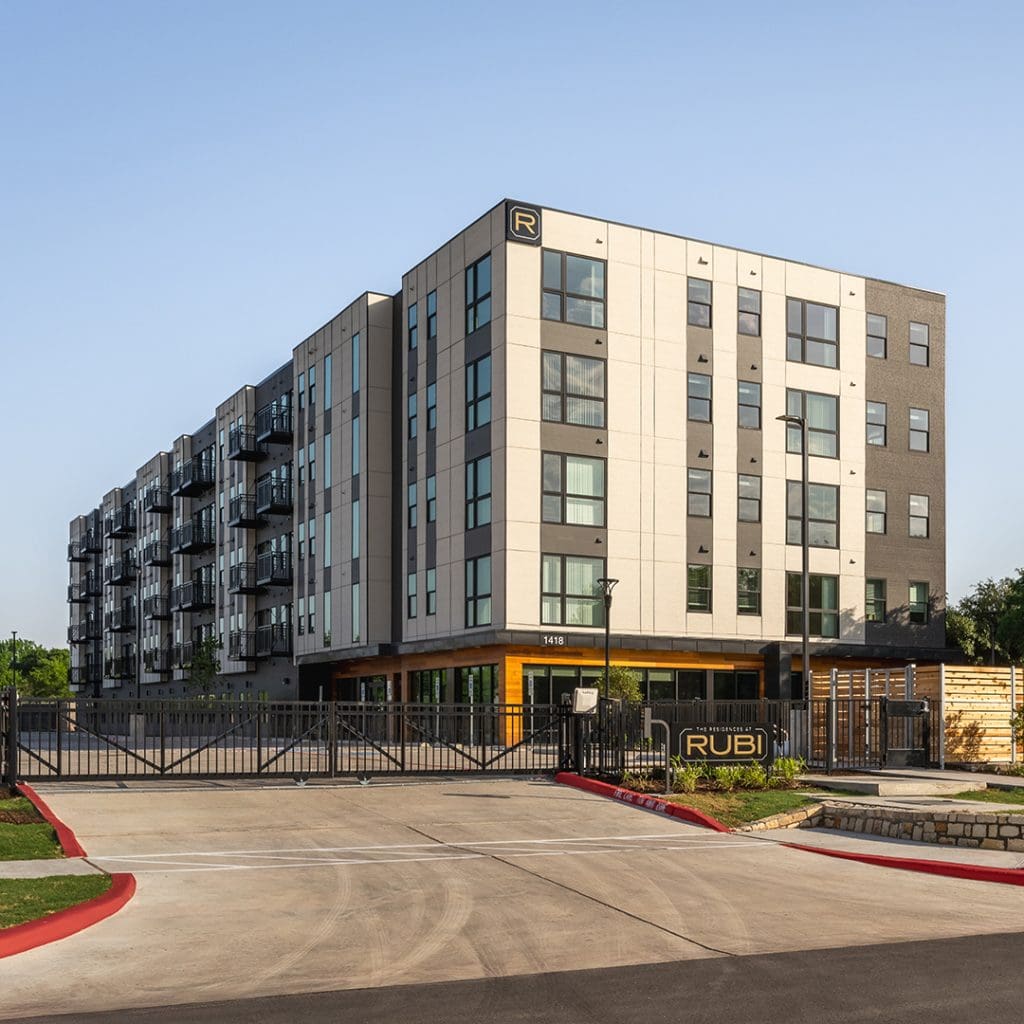
Residences at Rubi mixed-income housing in Austin, TX. Photo by Kieran Reeves Photography.
Wagner says he still thinks of MSA as a small firm when it comes to its project approach. “Within the firm, project teams are comprised of a team leader, project managers, project architects, and support staff,” he says. Each team draws upon firm resources like a full-time quality control director, director of business development, marketing director, and an accounting department. “Each team can function as a small, nimble boutique firm within a firm,” Wagner says. “But when you need added resources to help solve problems, work with production or timeline demands, we have those resources available.”
Wagner credits MSA’s involvement with Tuscan Village to his long-standing relationship with Tony Nigro, Tuscan Village’s senior vice president of design and construction. Their friendship dates to the 2008 recession, when they worked together on The Elliot at River’s Edge, an ambulatory healthcare facility in Manchester that was Wagner’s project at another architecture firm. “It was a difficult time because everyone needed work,” Wagner says. “It was also unique because we pulled together to make sure the project moved forward. We had a great collaboration on that project, and Tony (who worked at Suffolk Construction at the time) and I have remained friends ever since.”
The client-firm trust was built over time. “When you’ve worked with an individual for a while, and you trust them, they know what to expect and understand your personality and capabilities,” he says. “That helped us later with Tuscan Brands.”
“Giving our clients consistency with our relationships is important,” he says. “Architecture is a practice that has personality and depends on relationships. When we can align a project architect or manager with a client to build a good relationship, we want to foster that connection and maintain it for as long as possible. At the same time, if the relationship isn’t working, we’re not afraid to change a team up and get the right people on it.”
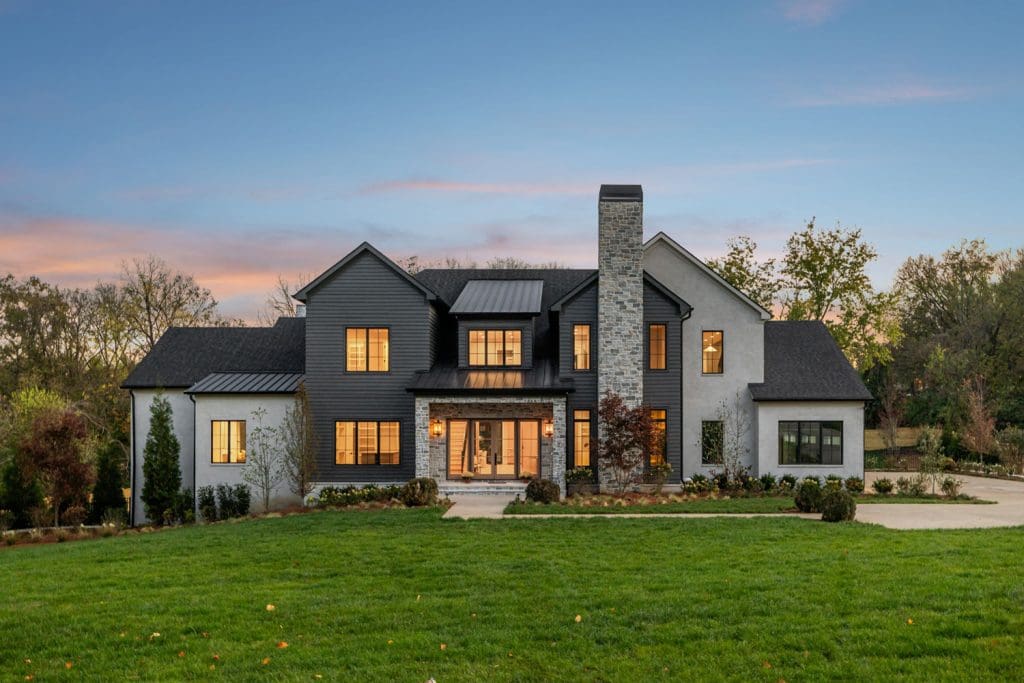
In New England, MSA is known for its multi-family housing projects; the firm is trying to build that same type of brand recognition in its Nashville and Austin markets while continuing to diversify its portfolio. “We’re doing more high-tech manufacturing in New England, and we’ve worked with a couple of military defense contractors,” Wagner says. He attributes this diverse client base to being able to recognize opportunities—thanks in part to having a full-time director of business development on staff—but also to having multiple offices in different regions, which makes MSA more resilient to market slowdowns and enables staff to shift their focus to where business is. “It maintains stability for the company,” says Wagner. “If we’re running the company as separate profit centers per office, we’d have more volatility. We’re able to maintain a cohesive culture across our offices and deal with market shifts in different parts of the country. It also allows MSA clients the capacity of a national firm but with local relationships and knowledge.”
Wagner became sole principal in 2025 when Harbeson left to found Red Fox Architects. He’s always keeping an eye on new opportunities, whether it’s adding talent or clients.
“You can’t script everything,” he says. “You never know where your next opportunity is going to come from, or if the intern you meet today is going to eventually be making real estate decisions on a multimillion-dollar project in 20 years. So, you must foster relationships the best you can and be ready to move when the time is right.”
Wagner is eager to continue making an impact. “I love my job,” he says. “I like building relationships with new clients and solving complicated challenges for them. That’s a culture within MSA that I want to continue to nurture with staff.”
This article was originally published in the Spring 2026 issue of forum magazine by AIA New Hampshire. You can read the digital version of the magazine here; this article begins on p. 24.